In the increasingly intelligent world we inhabit, where machines can recognise faces, translate languages, and even drive cars, there’s a powerful force at play: neural networks and deep learning. These aren’t just buzzwords; they are the fundamental technologies driving the most exciting advancements in AI.
At their core, neural networks are computational models inspired by the human brain’s intricate web of interconnected neurons. Just like our brains, they consist of layers of “neurons” (or nodes) that receive inputs, process them, and then pass on an output. Imagine a chain reaction: an input layer receives raw data (like pixels in an image), hidden layers perform complex calculations and pattern recognition, and an output layer delivers the final decision or prediction. The strength of the connections between these artificial neurons, known as “weights,” are adjusted during training, allowing the network to “learn” from data and improve its accuracy over time.
What Makes Deep Learning “Deep”?
So, what makes deep learning “deep”? It’s simply neural networks with many hidden layers – often dozens, sometimes even hundreds. This “depth” allows deep learning models to learn hierarchical representations of data, meaning they can grasp incredibly complex and abstract patterns that simpler networks might miss. Think of it like this: a shallow network might recognise basic shapes in an image, but a deep network can then use those shapes to identify a specific object, like a cat, regardless of its size, position, or lighting.
The magic happens during the “training” phase. Deep learning models are fed enormous datasets, often millions of examples. Through a process called “backpropagation,” the network assesses its predictions, calculates the “error,” and then adjusts its internal weights to reduce that error in future predictions. It’s akin to a child learning from their mistakes – the more examples they see and the more feedback they receive, the better they become.
Applications:
Image Recognition
Speech Recognition
Autonomous Vehicles
Recommendation Systems
Everyday Applications
The applications of neural networks and deep learning are already transforming our daily lives:
- Image Recognition: From facial recognition in your smartphone to medical image analysis that helps detect diseases like cancer.
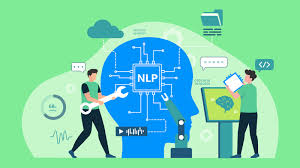
- Natural Language Processing (NLP): Powering virtual assistants like Siri and Alexa, enabling chatbots to understand your queries, and improving machine translation.
- Speech Recognition: Allowing you to dictate messages or control devices with your voice.
- Autonomous Vehicles: Helping self-driving cars perceive their surroundings, recognise obstacles, and navigate safely.
- Recommendation Systems: The algorithms behind Netflix suggesting your next binge-watch or Amazon recommending products you might like.
The future of neural networks and deep learning is incredibly exciting. As computing power continues to grow and more data becomes available, these technologies will become even more sophisticated, tackling challenges we can barely imagine today. We’re seeing advancements in areas like generative AI (creating realistic images, text, and even music), explainable AI (making these “black box” models more transparent), and even quantum neural networks, promising unprecedented computational capabilities.
While challenges remain, such as the vast computational resources required and the need for ethical considerations, the journey of neural networks and deep learning is just beginning. They are the brains beh