
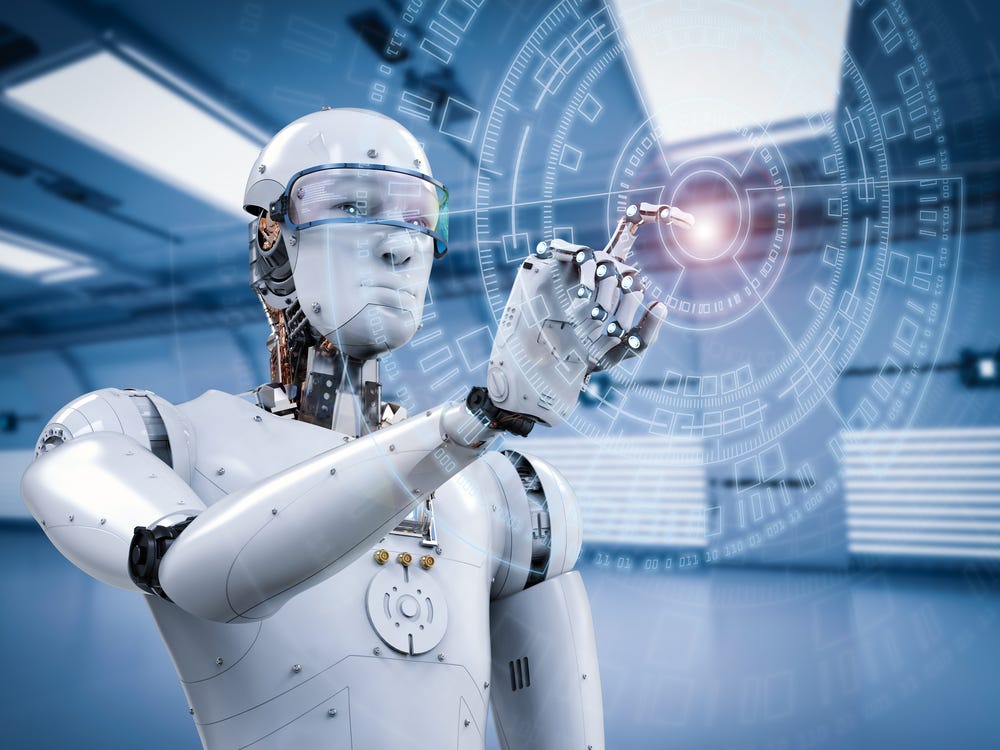
The factory floor of tomorrow is already taking shape, and it’s being built by intelligent robots – machines powered by cutting-edge Artificial Intelligence (AI). This powerful synergy between AI and robotics is moving far beyond traditional automation, ushering in a new era of industrial innovation that’s set to revolutionise businesses across the UK and the globe. We’re witnessing the dawn of truly smart factories, where efficiency, safety, and productivity reach unprecedented levels.
Gone are the days of rigid, pre-programmed robots performing only repetitive tasks in caged environments. Today’s intelligent robots, often referred to as AI-powered robots or AI robotics, leverage advanced AI techniques like machine learning and computer vision. This enables them to perceive their environment, learn from data, make autonomous decisions, and even collaborate safely alongside human workers. This integration represents a significant leap forward in industrial automation.
So, how are these intelligent machines transforming various industries?
In manufacturing, the impact is profound. AI-driven robots are optimising workflows, increasing throughput, and significantly reducing downtime. They excel in precision tasks like assembly and welding, with AI-enhanced quality control systems identifying defects with microscopic accuracy, leading to superior product quality and less waste. Furthermore, predictive maintenance is becoming standard practice, with robots equipped with sensors and AI algorithms monitoring machinery to anticipate failures before they occur, minimising costly production interruptions. This means less unplanned downtime and greater operational efficiency.
The supply chain and logistics sector is another area experiencing a seismic shift. Autonomous Mobile Robots (AMRs), guided by AI, are revolutionising warehouses by automating picking, sorting, and inventory management. This boosts warehouse efficiency and speeds up order fulfilment, crucial for the booming e-commerce market. The UK, in particular, is seeing rapid adoption, with reports suggesting over 85% of fulfilment warehouses could be automated by 2030, driven by labour shortages and the demand for cost savings.
Beyond the factory and warehouse, intelligent robots are also making inroads into other sectors. In healthcare, robotic systems powered by AI assist in surgical procedures, laboratory automation, and even patient rehabilitation. These applications enhance diagnostic accuracy and improve patient outcomes.
One of the most exciting developments is the rise of collaborative robots, or cobots. Designed to work in close proximity with humans, cobots are equipped with advanced safety features and intuitive programming. This allows them to assist human workers with physically demanding or repetitive tasks, improving workplace safety and freeing up employees for more complex, cognitive roles. This human-robot collaboration is key to maximising productivity and creating a more engaged workforce.
The future of AI and robotics is dynamic and promising. As AI development continues, we can expect even greater autonomy, dexterity, and adaptability from these intelligent systems. Challenges such as AI ethics, data security, and the need for workforce upskilling will need careful navigation. However, the trajectory is clear: intelligent robots are not merely tools, but increasingly integral partners in shaping a more efficient, productive, and innovative industrial landscape. Businesses that embrace these AI-powered solutions will undoubtedly gain a substantial competitive edge in the years to come.